
Before and after service
Nashville aeration and seeding, explained
A complete Nashville aeration and seeding guide covering preparation, grass identification, watering, mowing, leaves, weeds, feeding, and first-year expectations.
8-page guide · Free PDF · No signup required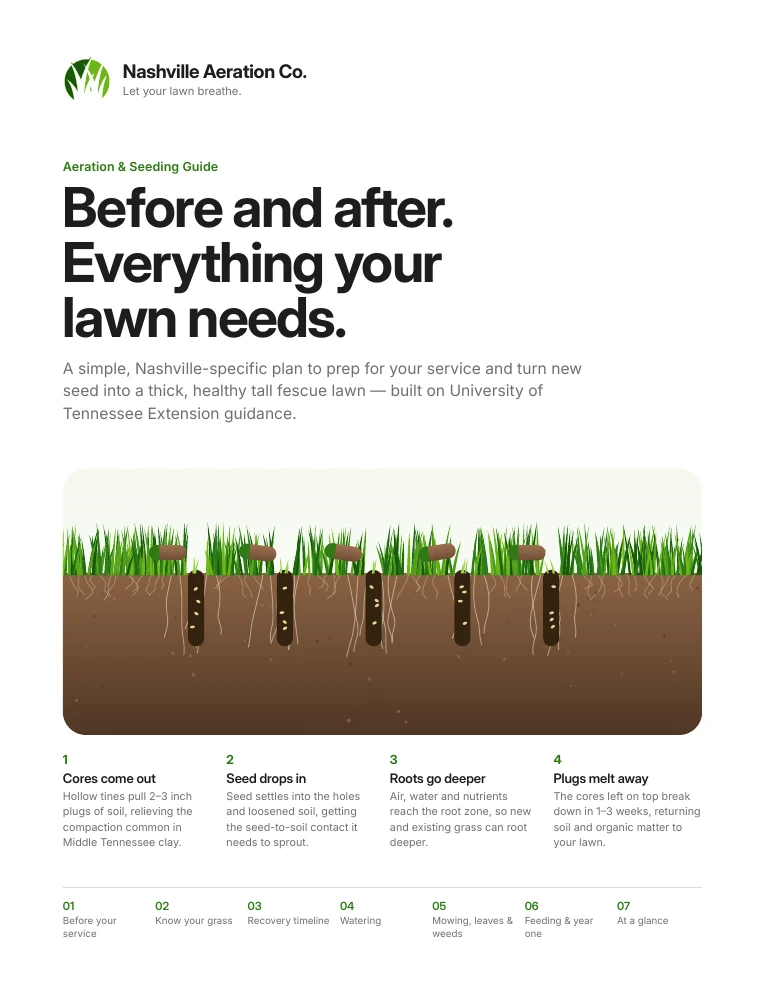 Open PDF
Part 01
Prepare the lawn for useful cores
Dry Nashville clay can resist the tines, while saturated soil can smear or rut. Water in advance when needed and use a simple screwdriver check to confirm the ground is moist several inches down without being muddy.
Move objects, unlock gates, keep pets inside, and mark sprinkler heads, shallow private lines, lighting, septic components, and invisible fences with visible flags. Tennessee 811 does not locate private lawn systems for you.
Part 02
Confirm the grass before adding seed
Fall seeding is designed for cool-season tall fescue. Bermuda and zoysia follow a late-spring and early-summer aeration calendar and should not automatically receive fall fescue seed.
Mixed lawns require a long-term decision. If warm-season grass covers much of the yard, adding more fescue can create a patchy lawn with competing seasonal colors and maintenance needs.
Part 03
The homeowner controls establishment after service
Start watering promptly, keep the surface damp during germination, and prevent runoff. After seedlings establish, transition gradually toward deeper, less frequent irrigation.
Leave the plugs, blow leaves gently, wait until new grass is tall enough for its first mow, and delay weed treatments until the young turf and the product label allow it. The one-page quick guide turns these steps into an easy refrigerator reference.
Download the free PDF.
The PDF includes the full calendar, checklists, tables, and reference notes in a format that is easy to save or print.
Common questions
A few answers before you download.
Do I need to remove the soil plugs?
No. Leave them in place. They usually break down through weather, irrigation, mowing, and normal use.
How soon should watering begin after seeding?
Begin promptly after service and keep the upper seedbed damp without puddles or runoff. Adjust frequency to sun, wind, shade, soil, and actual rain.
When can newly seeded grass be mowed?
Wait until it reaches roughly four inches, then mow dry grass back to about three inches with a sharp blade and wide turns.